What is Syntropy?
Modern science is discovering that there is no boundary between the living and the non-living world. Everything in creation is alive; nature is infinitely wondrous and cooperative, not competitive and exclusive. In its multifaceted manifestations, it can self-organize in a thousand possible ways.
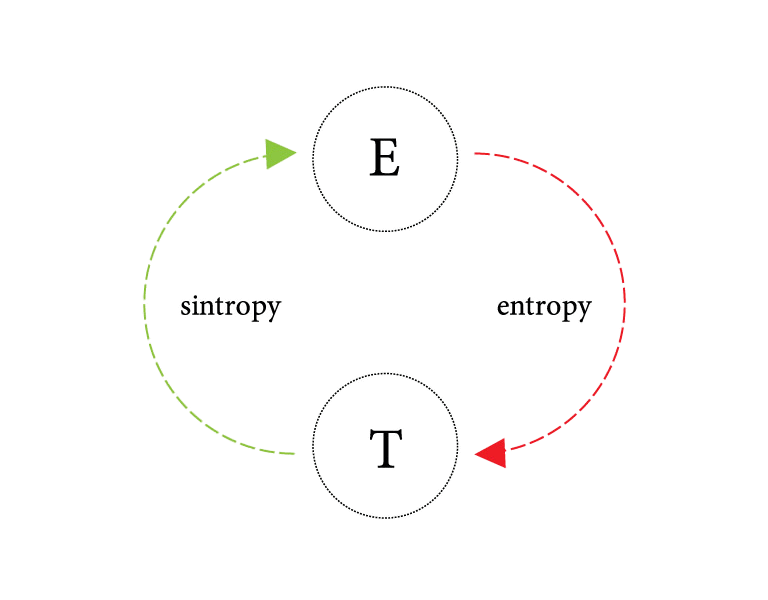
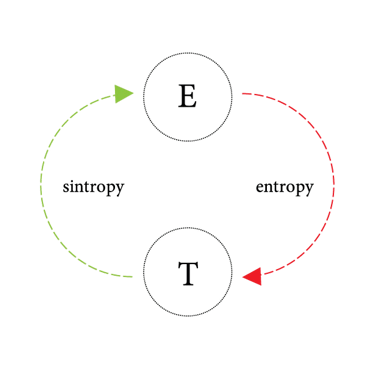
This self-organizing power of nature is called Syntropy. It was first discovered by mathematicians in the theory of complex systems, later by biologists in the field of microbiology, and now we are increasingly learning about Syntropy in theoretical and experimental physics, which until recently recognized only entropy. Syntropy, in fact, is the opposite of entropy. The law of Syntropy thus transcends the limiting law of entropy, which allowed only the degradation and decay of ordered structures.
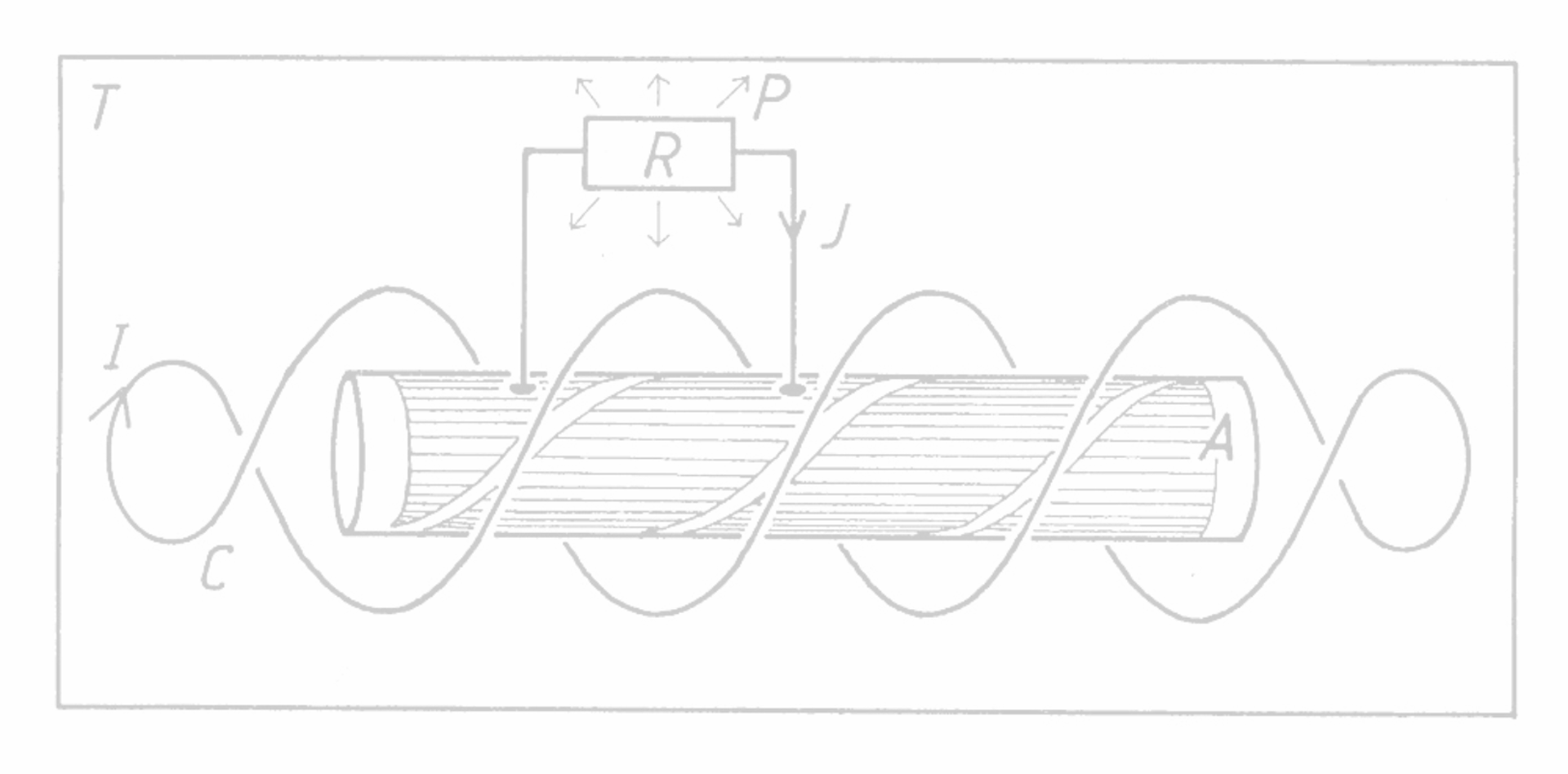
Thermodynamic particles (for example, atoms or electrons) are in constant thermal motion, but this motion is generally very chaotic and disordered. However, we can imagine syntropic devices that convert this disordered thermal energy from the natural environment into ordered electrical currents. This opens the possibility for new, ecologically completely clean sources of energy. Yet, this civilizational progress will only be possible when this new scientific discovery is never misused for domination over other beings.
Insights into Syntropy have a strong impact on our understanding of the world, casting new light on questions such as problems of violence, authority, and gender relations… In a philosophical, psychological, and spiritual sense, syntropic perception of time is revealed to us—a mystery we have sensed and dreamed of for millennia. In short, these are ideas that, in our wounded times, help build a new scientific and civilizational paradigm.
Fundamental reading
A Critique of the Law of Entropy (Andrej Detela, 1984)
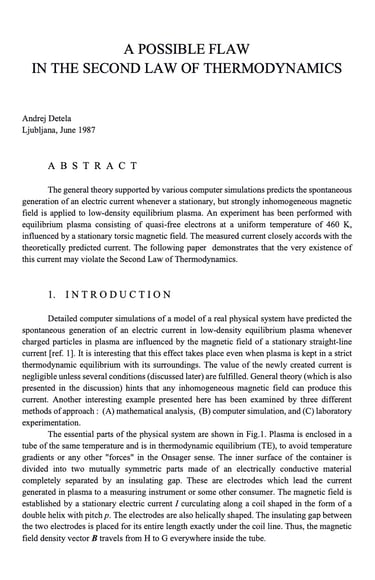
A Possible Flaw in the Second Law of Thermodynamics (Andrej Detela, 1987)
Links
Andrej Detela's website: https://www.andrejdetela.si